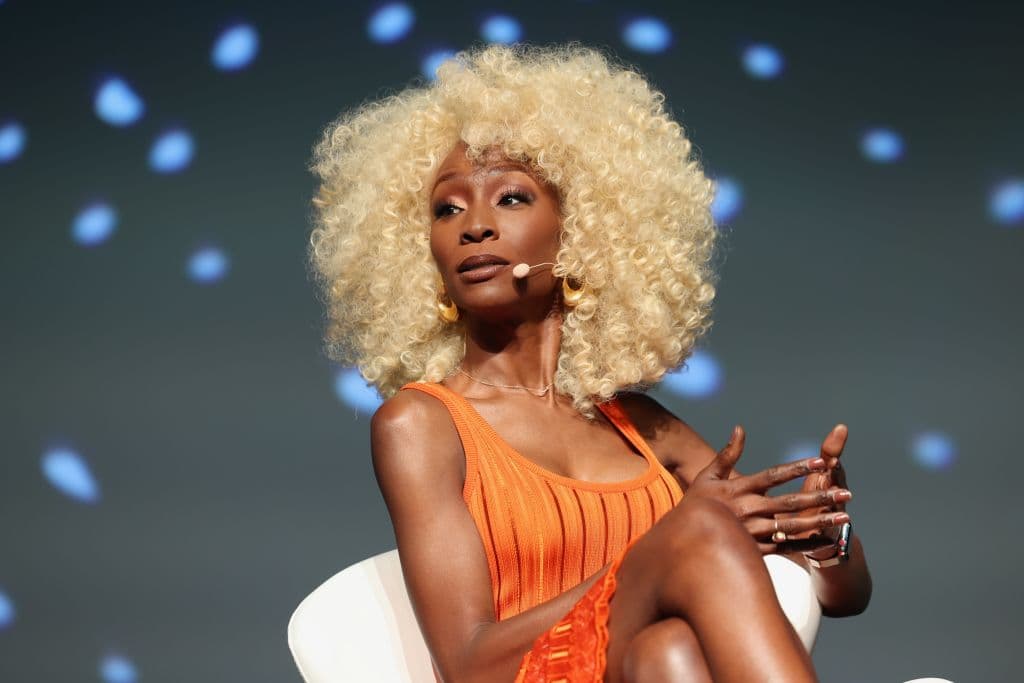
Angelica Ross is helping the LGBTQ+ community advance their careers in tech.
Ross, an actress known for her role on Ryan Murphy’s TV show “Pose,” which ran for three seasons, was a long-time advocate for LGBTQ+ rights before her Hollywood fame. She identifies as a transgender woman and is the CEO and founder of a co-learning and coworking community for LGBTQ+ people. Ross’ inspiration for the venture dates back to when she experienced unemployment and underemployment, which she said was a common pattern among Black trans individuals. During an interview for Inc., moderated by The Honey Pot Company co-founder Beatrice Dixon, Ross said the adult industry seemed to be the only career path at the time she faced those challenges.
“The adult industry was like literally the strongest viable option to pay for hormone therapy, to pay for transition-related experience, let alone rent and everything else. It was sort of my introduction to the adult industry that faced me with adult websites,” Ross told Inc.
However, a woman who owned an adult website ended up hiring her to assist with cropping images and updating the website’s Cascading Style Sheets (CSS) and HyperText Markup Language (HTML) on the front page.
“She saved money by hiring me as the webmaster who didn’t know anything,” Ross recalled.
Beyond the role, Ross took it upon herself to continue learning, leading her to explore CSS, HTML, content management systems, and photo retouching through Lynda.com, which was acquired by LinkedIn for $1.5 billion in 2015, according to Spectrum Equity.
These skills proved useful when she set out to create her own version. She later decided to exit the adult industry altogether and began working at a nonprofit as an employment coach for trans people.
“It was through having that experience and growing through grace of using technology as a harm reduction strategy to get me off the streets and behind a computer screen that I was then able to take that model to a non-profit that hired me as an employment coach for trans people,” she said during her interview with Inc.
TransTech Social Enterprises
However, she realized she was being “tokenized,” and said her feedback and perspective to assist trans workers wasn’t being considered, per the Inc. interview. In 2014, she founded TransTech Social Enterprises. According to its website, its community benefits from pathways to tech labs, coworking hubs, and learning events. It also hosts the annual TransTech Summit, which launched in 2017 and gathers leaders and corporate, business, and education partners to empower marginalized communities through tech.
Additionally, the organization offers TransTech G.R.O.W., which offers support on career readiness, salary negotiation, interview readiness, and resume-building skills, among others. The program is made possible through a partnership with Google.
“You start to decide your own value, and you can do that from the street all the way to the boardroom. So that is honestly what is behind me creating TransTech and teaching people that technology is just not about learning coding, but you can learn to become a beauty influencer on YouTube, or you can be an audio engineer in music,” she said during her interview on Inc.
All in all, the goal of the organization is for community members to see themselves as “an asset” to the tech industry.