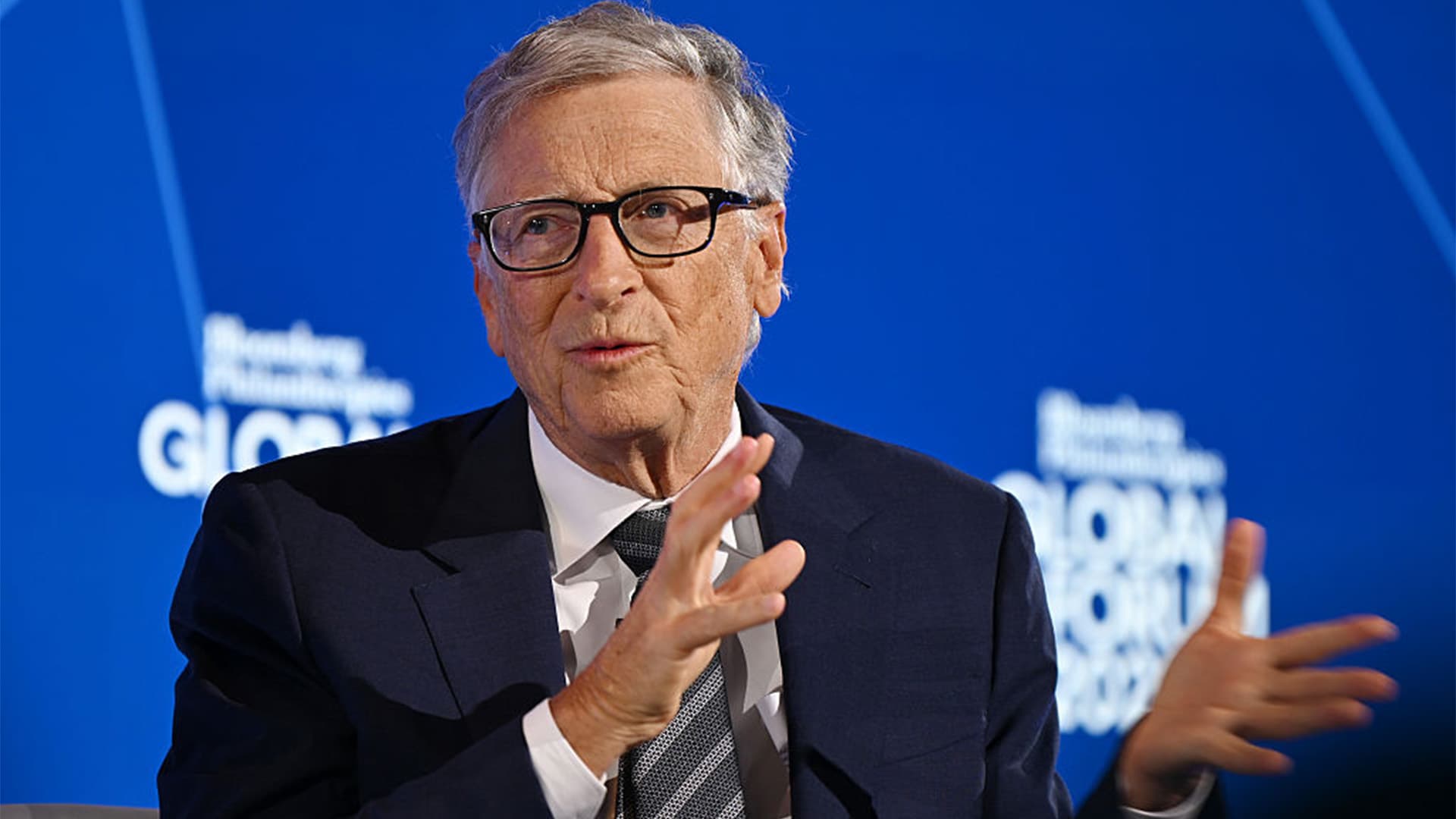
The Gates Foundation and OpenAI are committing $50 million to African health clinics.
Horizon1000
Fortune reports that the companies have launched a collaborative initiative called “Horizon1000,” which aims to leverage AI to improve healthcare across sub-Saharan Africa, beginning in Rwanda. At the World Economic Forum in Davos, Switzerland, on Wednesday, Gates described the initiative as a “game-changer for expanding access to quality care,” according to the Financial Times.
The $50 million commitment will provide funding and AI tools to improve workflows at 1,000 primary healthcare clinics by 2028, reports the outlet. The effort comes as sub-Saharan Africa faces a shortage of around six million healthcare workers, leaving many patients without adequate administrative support or care. The gap has contributed to increased mortality rates and could undermine 25 years of progress in global health, Fortune reports.
In Rwanda, there is one healthcare worker for every 1,000 people, far below the recommended four per 1,000, notes the outlet. By leveraging AI, Horizon1000 aims to ensure that healthcare workers have more support with clinical record-keeping and symptom evaluations, notes The Financial Times.
“As part of the Horizon1000 initiative, we aim to accelerate the adoption of AI tools across primary care clinics, within communities, and in people’s homes,” Gates said, according to Fortune. “These AI tools will support health workers, not replace them.”
“AI is going to be a scientific marvel no matter what,” OpenAI CEO Sam Altman said, per The Financial Times. “But for it to be a societal marvel, we’ve got to figure out ways that we use this incredible technology to improve people’s lives.”
Concerns
The Financial Times reports that researchers have raised concerns about the adoption of AI in the medical field, including the fabrications that AI can generate, patient data privacy, and language barriers with the technology, as most AI models use English. Additionally, insufficient data on diseases that disproportionately affect under-resourced populations could lead to AI tools producing harmful or biased outcomes, notes the outlet.
Per The Financial Times, the Gates Foundation said it will assess AI models for discrepancies and plans to launch features that take cultural and contextual factors into account.