All results

This founder is building a legacy one payroll system at a time. Craig J. Lewis is the founder and CEO of the FinTech platform changing the way businesses pay people. On a mission to simplify the payroll system while building a legacy to ensure that people remember his last name, Lewis knows what it means to be resilient when the odds are stacked against him. Gig Wage was built to help ease pain points for the payroll system that neglects the 1099 employee, or what Lewis calls the “gig” worker, made up of freelancers, contractors, etc. To date, Lewis has managed to raise $13.2 million and is on a path to quadrupling the size of his company by the end of 2021. He sat down with AfroTech to discuss what representation means to him in the venture capital space, where he feels the industry gets it wrong and how they can correct that, and the solution that Gig Wage provides that isn’t found on the market. View this post on Instagram A post shared by Gig Wage (@gigwage) AfroTech: What...


For more than a decade , many industries have gradually shifted from hiring full-time employees in favor of contract workers. Whether by choice or necessity, many individuals work full-time in the “gig economy” — a labor market facilitated by online job boards advertising project-based or contract work — by stringing together multiple gigs to support themselves and their families. If you’re considering gig work, start by understanding which areas pay the most, require minimal startup costs, have relatively few expenses, and can be performed from anywhere. Consider these fields: Freelance Writing While it can take some time to make a consistent income, established writers can make as much as $30 an hour . You can work for an agency that specializes in producing content for other companies or individuals. Opt for quality over quantity at first until you can confidently produce high-quality content as per the company’s standards more quickly to find success on these platforms. You can...
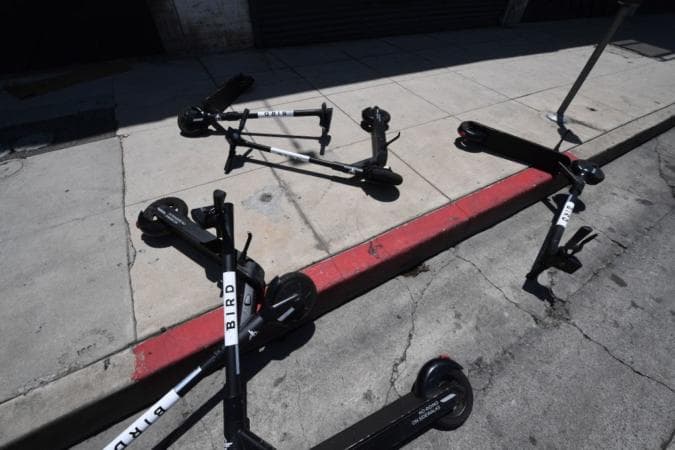
Whether you’re trying to make a little extra cash to help you get by until payday or you want to boost your savings to get one step closer to a major purchase, there are a host of opportunities in the gig economy to find a side hustle that fits your talents and schedule. Yet it’s important to remember that side hustles typically involve some expenses. For example, if you’re charging Bird scooters, that’s your electricity that you’re using to do so. Before getting started, it’s smart to tally up your total expenses and look for ways to maximize your time and funds. Not sure how to determine the costs of a side hustle like charging Bird scooters? Here’s everything you need to know. How to make money charging Bird scooters Charging Bird scooters is a gig that appeals to a lot of people because you can mostly be in charge of your own schedule — you pick the scooters up, charge them and drop them back in high-traffic areas between 4:00 a.m. and 7:00 a.m. per Bird’s app. Bird refers to...



California’s new Assembly Bill 5 law takes effect on the first of January. However, instead of setting a good tone for the new year, for many, AB5 appears to be a tone-deaf effort. Launched by California Assemblywoman Lorena Gonzalez to address gig economy issues that have resulted in unfair treatment of Lyft and Uber drivers, AB5 was designed to protect these workers. “AB5 forbids businesses to use contractors unless the companies can pass a stringent requirement known as the ‘ABC test.’ It’s designed to ensure that all workers are classified as employees unless they perform their work independent of supervision, have an established business doing the same sort of work for multiple customers and are doing work that isn’t part of the company’s core business,” Megan McArdle said via The Washington Post. Companies classifying these workers as “employees” must then set aside taxes, Social Security benefits and other benefits . The new law — designed to protect rideshare drivers — hurts...

If you’re in college, you might as well find a way to make your education pay for itself. However, trying to juggle classes, homework, and a social life can make it hard to fit a traditional part-time job into your schedule. Luckily, side hustles are meant to offer a lot of flexibility. Even if you’re not ready for a career in tech, we’ve listed five categories of side hustles that use current technology so you can make money between classes. 1. Rideshare Driver For those of you with a car, signing up as a rideshare driver for apps like Uber or Lyft is one way to make money. Like most gig apps, rideshares tend to offer a lot of schedule flexibility — you log in and out when you want. You do need to make sure that your insurance will allow you to drive for rideshare apps. Also, take a look at each apps’ specific requirements . Uber, for example, will only take drivers who are 21 or older with 4-door vehicles that are ten years old or newer. 2. Delivery If you don’t drive, you can...

Uber and Lyft drivers, along with a list of other gig workers in California, may have something to cheer about now that a new law has passed to give contract workers more protections. The California state Assembly passed AB5, a bill that would require status changes to contract workers to complete essential tasks for companies. The law is also set to impact exotic dancers and manicurists; however, hairstylists, doctors, lawyers, real estate agents, and financial advisers will be exempt from the rules because they work as true independent workers under their own companies, according to Vox. Under AB5, companies can only label workers as contractors if the worker: (a) is free from the company’s control, (b) is doing work that isn’t central to the company’s business, and (c) has an independent business in that industry. If they don’t meet all three of those conditions, then they have to be classified as employees. Misclassification of workers has helped major companies save money for...
Uber drivers are earning less than half of what they made five years ago, while other sectors are doubling their earnings, according to a recent report from Recode. A study by JPMorgan Chase Institute showed that there was a 53 percent decline in earnings for transportation workers — which include ride-sharing drivers and delivery drivers for other gig economy jobs — between 2013 and 2017. The study distinguished gig economy jobs by transportation, non-transport work, and selling and leasing. JPMorgan Chase Institute looked at more than 39 million Chase checking accounts and tracked payments through 128 online platforms. The leasing sector, which includes Airbnb, saw the largest increase in earnings over the three-year span with 69 percent growth. The non-transport work and selling sectors experienced 1.9 and 9.4 percent increases, respectively. Photo: JPMorgan Chase Institute The average earnings for transportation workers dropped from $1,469 to $783. Leasing sector workers saw...