All results


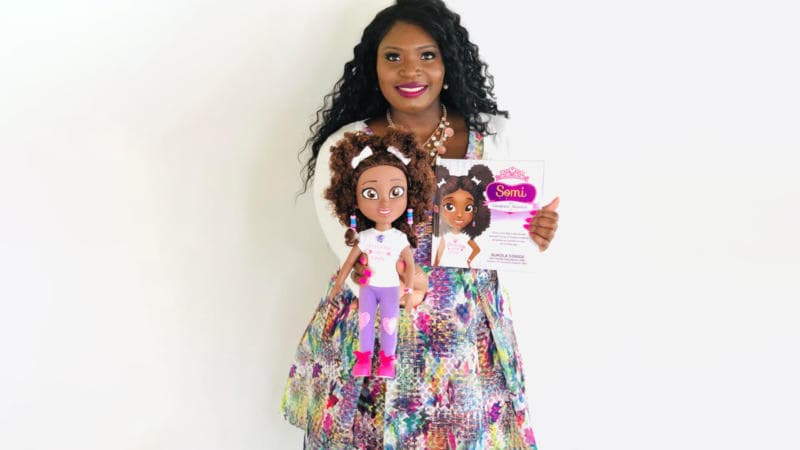
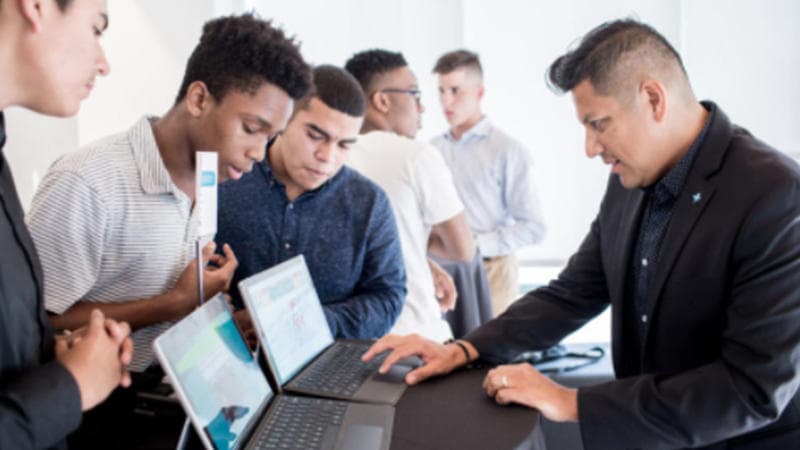

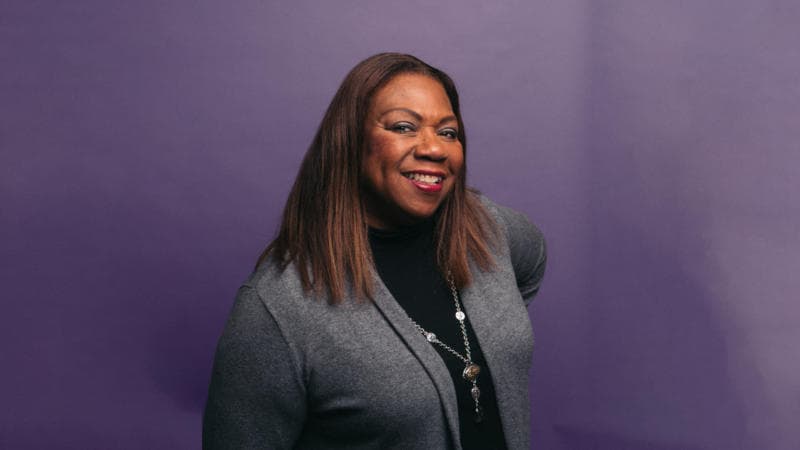

Sometimes it just takes a little inspiration to lead young people into careers that could change their lives. That’s why Dropbox, one of the leading collaboration platforms, offers opportunities for its employees to influence students from local schools through their community engagement program. Dropbox is partnering with Skyline High in Oakland, California through the Oakland Public Education Fund. This non-profit is apart of a larger initiative called Circle the Schools, where the goal is to align companies, like Dropbox, with local Bay Area public schools to provide additional support to teachers and students. Volunteers also participate in various events like Computer Science Week to inspire students and show them that there are many different career paths available in the field of technology. The company expanded its efforts to include Skyline High and Bret Harte Elementary school in the Bay Area in 2018 after successfully partnering with Mission High School in San Francisco...

IBM wants to make facial recognition systems more fair and accurate. The company just released a research paper along with a substantial dataset of 1 million images with intrinsic facial features including facial symmetry, skin color, age, and gender. The tech giant hopes to use the Diversity in Faces (DiF) dataset to advance the study of diversity in facial recognition and further aid the development of the technology. “Face recognition is a long-standing challenge in the field of Artificial Intelligence (AI),” the authors of the paper wrote. “However, with recent advances in neural networks, face recognition has achieved unprecedented accuracy, built largely on data-driven deep learning methods.” Lead scientist at IBM, John Smith told CNBC that many prominent datasets lack balance and coverage of facial images. “In order for the technology to advance it needs to be built on diverse training data,” he said. “The data does not reflect the faces we see in the world.” Bias in facial...

A new study found that Black Ph.D. students in STEM fields were three times less likely to have published a paper in an academic journal than their peers. Researchers at UC Berkeley, UCLA, Stanford and the California Institute of Technology (Caltech) explored how personal characteristics—such as race and gender—and preparedness for graduate-level coursework affected their likelihood of being published. The study, titled “Structure and Belonging: Pathways to Success for Underrepresented Minority and Women Ph.D. Students in STEM Fields,” showed that Black STEM scholars published at significantly lower rates than their counterparts—including other underrepresented students—due to perceived readiness, feelings of belonging, and perceptions of program structure. Of the 430 students found most likely to publish academic papers, white, Asian, Latinx and Native American students published at nearly equal rates. “Our study strongly indicates that the onus should not fall on minority students...
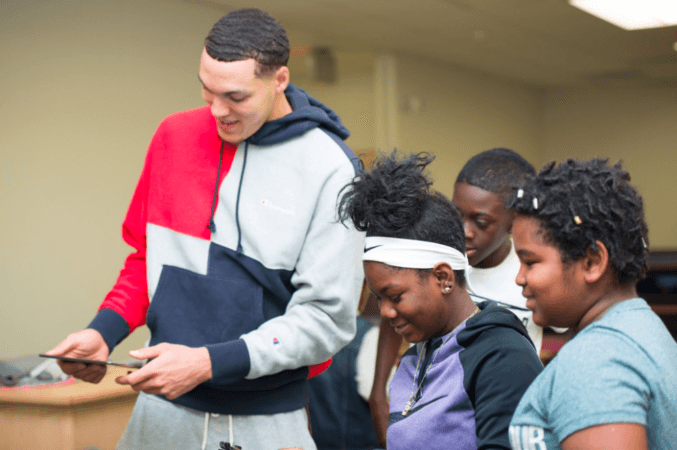
Orlando Magic player Aaron Gordon is no stranger to Silicon Valley. Through his mom, Shelly Davis Gordon–who worked in the industry for various high-profile companies over three decades–Aaron practically grew up immersed in tech. Gordon’s mother worked for chip maker Alera (which was previously acquired by Intel), and started a computer science after-school program to teach students how computers operate. Now, the the fourth year power forward out of Arizona is following in his mom’s footsteps to launch CodeOrlando, a coding program for local youth with disadvantaged backgrounds. “I just want kids from a not-so-great upbringing who are underprivileged to have the same opportunity that everybody else has,” said Gordon to the Orlando Sentinel . “I want them to not be cast aside because of the color of their skin or what they look like or if they don’t have both parents. I want everything to be equal and fair.” CodeOrlando will use smartphone or tablet apps to build code that will...
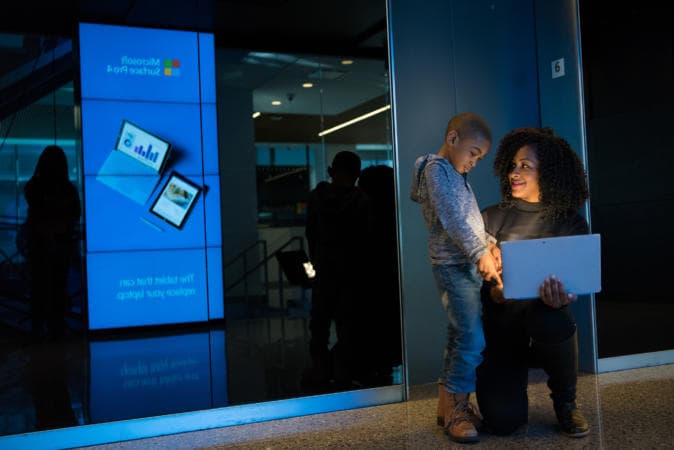
Google is teaming up with MotherCoders , a nonprofit helping mothers thrive in tech, and women.nyc to put on a nine-week tech training program for moms of all backgrounds in New York City. The program is designed to set moms on a tech career path through skills training for career advancement, accelerating a startup, or re-entering the workforce. To qualify, moms must be at least 21-years-old, have a college degree, and some experience trying to learn to code. “There’s a huge population of very educated people, but moms tend to get pushed out of the workforce,” said MotherCoders founder Tina Lee to TechCrunch . “We end up with a lot of moms who are overeducated and underemployed. There’s no reason why moms shouldn’t be included in the diversity and inclusion initiatives going on.” MotherCoders participants learn HTML, CSS, and JavaScript, during the program and are offered free childcare throughout the duration of the nine-week training. MotherCoders NYC will be entirely sponsored...

As the tech industry moves towards transparency in the workplace, more companies are committing to improving diversity and fostering inclusion. This includes publicly sharing their employee diversity data. While it is clear the industry still has work to do, companies are tracking internal progress and sharing how they plan to move diversity and inclusion forward. Lenovo just joined the slew of high-profile tech companies in releasing their diversity figures and core inclusion strategy for the first time. The report showed the computer manufacturing company is only 7.3 percent Black and 4.9 percent Latino. The comparison shows the majority of their workforce is white at 66.9 percent and 18.6 percent Asian. The computer manufacturing company plans to hire and retain diverse talent while focusing on reviewing their hiring process and searching for potential structural bias. Part of the recruitment strategy to reach diverse candidates is through their University Hiring program...

Dominican University of California and Make School , a coding boot camp based in San Francisco, are teaming up to give students a more well-rounded education. In an effort to increase enrollment, liberal arts school Dominican University is offering computer science courses taught by Make School professors and Make School is offering general education courses taught by Dominican Univerisity professors. The partnership is working to stifle enrollment declines in coding programs, as well. Low enrollment in coding bootcamps has caused some companies to close or target corporations as training programs. Dominican University plans to offer a computer science minor within five years; however, creating curricula and finding professors will be expensive and time-consuming. The partnership with Make School gives students the chance to learn coding skills, while providing Dominican University the framework for creating a computer science minor. Make School currently offers a two-year...
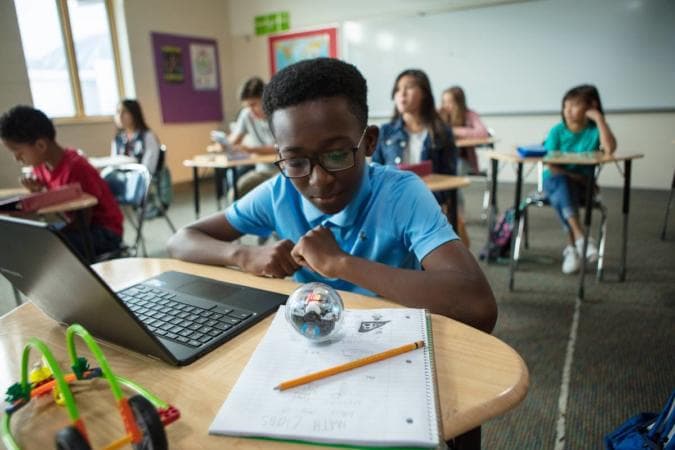
Students and teachers can apply to receive a free robot in the mail from Facebook and Sphero (the creator of the Star Wars BB-8 toy). The bolt robot is part of Facebook’s CodeFWD program, its latest attempt at getting kids passionate about coding. The spherical robots can be told to roll in certain directions, light up and more with the use of block-based JavaScript that the kids learn how to execute. By having this kind of fun technology in schools across the nation, Facebook hopes that underrepresented groups in technology will gain access and build interest in the industry at a younger age. Right now the program is available for fourth through eighth-grade classes being led by credentialed teachers as well as registered non-profits with internet and computer access. More details of the program can be found on Facebook’s newly launched Facebook For Education website, which serves to bridge computer science programs with educational programs that encourage them. Although these...

According to a new report from Code.org , more minorities — including women, black and Latino students — took Advanced Placement computer science classes than ever before in 2018. Even rural participation was up in a major way, expanding the average demographic for who takes AP courses in America. In general, 31% more students are taking AP computer science exams than previous years, but within that group, black students who took the courses grew 44 percent, Hispanic and Latino students grew by 41 percent, women grew by almost 40 percent this year and rural participants grew by 42 percent. The growth is significant, especially when you consider that just 2 percent of schools with high percentages of underrepresented students of color offer AP computer science classes to begin with. These courses are essential because of the power and opportunity that comes from computer science. We’re still on the technology wave, and through these courses, students can get exposed skills that lead...