All results










Have your finances been rocked by the coronavirus? Your credit card issuer might be willing to offer a helping hand, but you’ll likely have to ask for it. As America and the rest of the world wrestle with the COVID-19 pandemic, more daily lives are being upended. Lockdowns, self-quarantines and other drastic measures to stop the spread of the virus are becoming more common here in the U.S., leading to missed paychecks and unpaid time off from work and other hardships. For many Americans, whose financial margin for error is tiny even in the best of economic times, these disruptions can be a really big deal. They can make it hard to pay your mortgage, car loan or credit card bill, for example. The good news is that these disruptions will likely only be temporary, but that doesn’t make things any easier in the short term. Fortunately, you can take steps right now to help your situation: the simplest step is to call your credit card issuer and ask for help. Many credit card issuers have...
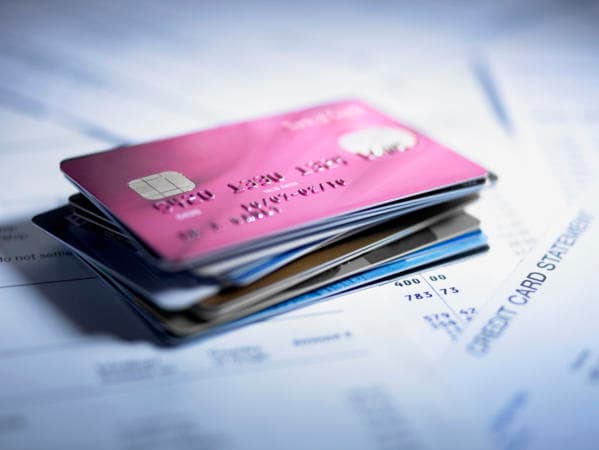
Let’s be real — some of us might not have made as much financial progress as we would have liked in 2019. Thankfully, it’s a new year, and we have another chance to do better. CompareCards commissioned a survey of almost 800 credit cardholders and found that nearly 1 in 5 cardholders with credit card debt didn’t make any progress towards paying off their debt last year. On top of that, 35 percent of cardholders entered 2020 with more credit card debt than they had in the beginning of 2019. In this article: Key findings Many cardholders started the new year with card debt Nearly 1 in 5 indebted cardholders didn’t make any payoff progress in 2019 The credit card debt gender gap continues How to prioritize paying off credit card debt in 2020 The bottom line Key findings Nearly 1 in 5 cardholders with credit card debt didn’t make any payoff progress this year. 35 percent of cardholders have more credit card debt now than they did on Jan. 1, 2019. On the other hand, 34 percent now have...

Unfortunately, Social Security payments can be garnished if you default on federal student loans , as many retired borrowers find out the hard way. Called an offset, more people than ever are losing out on Social Security benefits due to federal student loan debt. However, there are limits to how much can be garnished for student loans, though these limits don’t go far enough. If you’ve defaulted on your student loan debt, here’s what you need to know about student loans and Social Security benefits, as well as your options for student loan forgiveness at age 65 and above. Can student loan debt threaten your Social Security payments? What’s the Social Security garnishment limit? How many Americans had their Social Security payments garnished? What can people do to save their Social Security payments? What can you do to avoid student loan default? Student loans and Social Security payments: The bottom line Can student loan debt threaten your Social Security payments? Yes — and the...

Becoming debt-free is no easy feat, but by the age of 24, I was able to pay off $37,000 in student loans. Through sharing my story, I uncovered fears hidden within my friend group. A common theme was believing they had too much debt, the practice of avoiding debt, the shame of accumulating more debt, and uncertainty about how to stop living paycheck to paycheck. Once the fears were in the open, there was an opportunity to heal and grow. After helping my friends, one friend noted that the information was life-changing and too valuable not to share on a larger scale. From there, CreateFinStew was born. What began as a journey of helping my social circle developed into building a company that creatively transforms the financial stewardship of individuals and organizations. Financial Stewardship Financial stewardship is important to me and should be important to everyone because it helps foster good intentions about our present and our future. We are called to be good stewards of the...