All results







California’s new Assembly Bill 5 law takes effect on the first of January. However, instead of setting a good tone for the new year, for many, AB5 appears to be a tone-deaf effort. Launched by California Assemblywoman Lorena Gonzalez to address gig economy issues that have resulted in unfair treatment of Lyft and Uber drivers, AB5 was designed to protect these workers. “AB5 forbids businesses to use contractors unless the companies can pass a stringent requirement known as the ‘ABC test.’ It’s designed to ensure that all workers are classified as employees unless they perform their work independent of supervision, have an established business doing the same sort of work for multiple customers and are doing work that isn’t part of the company’s core business,” Megan McArdle said via The Washington Post. Companies classifying these workers as “employees” must then set aside taxes, Social Security benefits and other benefits . The new law — designed to protect rideshare drivers — hurts...

If you’re in college, you might as well find a way to make your education pay for itself. However, trying to juggle classes, homework, and a social life can make it hard to fit a traditional part-time job into your schedule. Luckily, side hustles are meant to offer a lot of flexibility. Even if you’re not ready for a career in tech, we’ve listed five categories of side hustles that use current technology so you can make money between classes. 1. Rideshare Driver For those of you with a car, signing up as a rideshare driver for apps like Uber or Lyft is one way to make money. Like most gig apps, rideshares tend to offer a lot of schedule flexibility — you log in and out when you want. You do need to make sure that your insurance will allow you to drive for rideshare apps. Also, take a look at each apps’ specific requirements . Uber, for example, will only take drivers who are 21 or older with 4-door vehicles that are ten years old or newer. 2. Delivery If you don’t drive, you can...
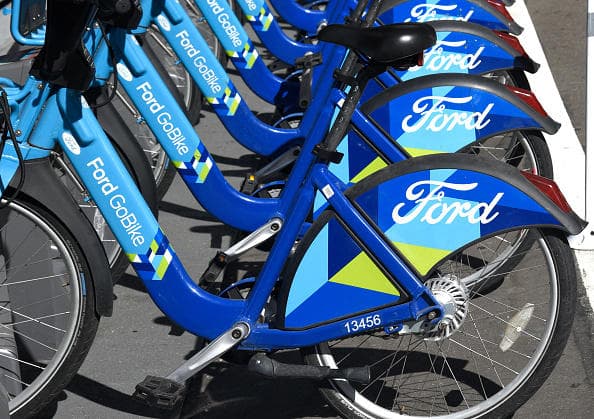
The bikeshare industry has grown immensely in the United States. Now, many cities are beginning to explore new dockless bike options — but for San Francisco, that may pose a problem. Recently, Lyft sued San Francisco over claims that the city was violating a ten-year contract that gave the company exclusive rights to operate bikeshare programs, TechCrunch reported . However, San Francisco says that the contract doesn’t apply to dockless programs. Lyft is the owner of Motivate, which operates the Ford Gobike program in San Francisco. The only other company that operates a bikeshare program in the city is Uber’s JUMP, which offers dockless bikes. According to TechCrunch, Lyft says that was supposed to be an exemption since Motivate wasn’t able to deploy its own dockless bikes. JUMP’s pilot ends in July, so Lyft’s issues stem from San Francisco seeking additional operators for dockless bikes. “We are eager to continue investing in the regional bikeshare system with the MTC and San...

Uber and Lyft drivers, along with a list of other gig workers in California, may have something to cheer about now that a new law has passed to give contract workers more protections. The California state Assembly passed AB5, a bill that would require status changes to contract workers to complete essential tasks for companies. The law is also set to impact exotic dancers and manicurists; however, hairstylists, doctors, lawyers, real estate agents, and financial advisers will be exempt from the rules because they work as true independent workers under their own companies, according to Vox. Under AB5, companies can only label workers as contractors if the worker: (a) is free from the company’s control, (b) is doing work that isn’t central to the company’s business, and (c) has an independent business in that industry. If they don’t meet all three of those conditions, then they have to be classified as employees. Misclassification of workers has helped major companies save money for...
It’s officially Pride Month and Lyft is celebrating by making its app more inclusive to the LGBTQ community. The company recently announced in a blog post that it is expanding its list of pronouns to include transgender and non-binary riders. “We are proud to launch a Pride campaign centred around advocating for transgender and non-binary inclusion and equality, including name change support and preferred pronouns in-app,” Lyft said on its blog. Users can update their pronouns with a few easy steps. Select Menu, then View Profile, then tap Personal info, select your pronoun, and save the updated information. The app gives riders five options which allow users to not to specify their pronouns and flag when they do not see their pronouns listed. Photo: Lyft The update is available for users in the U.S. and Canada and was developed out of a partnership with Pride Toronto. Lyft is also partnering with Casey House, Canada’s first and only stand-alone hospital for people with HIV/AIDS....

Ride-share apps can be one of the easiest and most convenient ways to get around — unless you’re disabled. A recent report has found that if you need a wheelchair accessible Uber or Lyft in New York City, it will often be slower and more expensive. The study “Still Left Behind” — conducted by New York Lawyers for the Public Interest (NYLPI) — backs up what many disabled people have already said about ride share apps. For the study, the NYLPI compared quotes, fares, and wait times from 224 pairs of ride request (448 total trip requests) to and from major destinations in NYC’s five boroughs. NYLPI found that Uber’s wait times were more than twice as long for wheelchair accessible rides and Lyft could only meet 38 percent of the requests. Meanwhile, Juno — who only operates in NYC — didn’t offer on-demand wheelchair accessible vehicles at all. Instead, Juno’s site asks users to book rides by phone at least 24 hours in advance. According to NYPLI , Juno’s request is “notwithstanding...
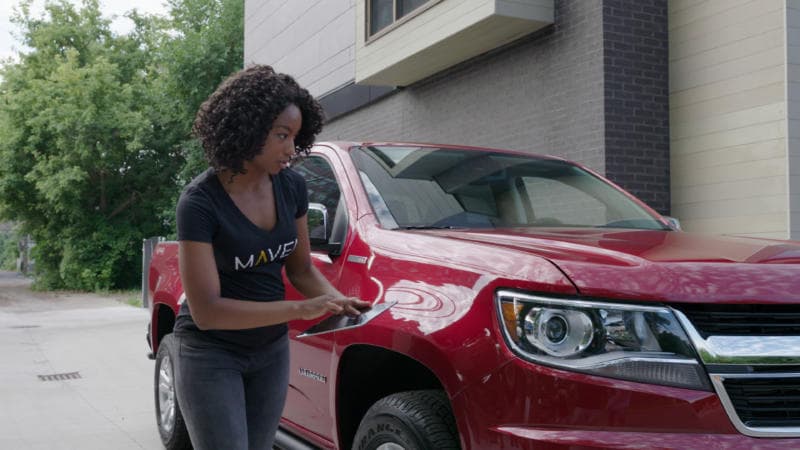
Maven — the car-sharing and car rental service — is exiting from eight major cities including Boston, Chicago, and New York City, according to the Wall Street Journal. The company is expected to wind down service in the designated cities by the end of July to focus on less competitive markets. Maven wants to “concentrate on markets in which we have the strongest current demand and growth potential,” one company spokeswoman told WSJ. Maven’s operations in Detroit, Los Angeles, Washington, D.C., and Toronto will continue; however, its transition out of some of the biggest cities in the U.S. highlights some of the accelerated changes happening in transportation-tech. Last month, New York City council passed a bill to decongest the city’s streets of ride-hailing cars by posing a cap on the number of drivers companies could have on the road. The law also required Uber and Lyft to improve pay for its drivers. Both companies, whose drivers sometimes rent cars from Maven, stopped hiring new...